Crestech Logo Launch

Logo Image

We have a new identity! Our new logo smiles at you in all its rich purple glory. Now we unpack the context of how. 

Back in 2005, we began Crestech with a clear vision of bringing quality into software releases. 16 years in business, 1600 successful projects in our kitty, 300+ customers who trust us and 200+ of team members with whom we built this dream. Big numbers and a long list. Long enough for us to ask the question: what’s more? 

We knew we didn’t need to look any further than inwards. Baring our raison d’etre and dissecting it to its simplistic detail. To look inwards is to ask questions like what do we mean to our clients, how does our team working with us feel? We do what we do but why? When we get past the run of the mill details, we tend to see the bigger picture. The perspective of our clients is rooted deeply in the quality of our services. To be Crestech for them is to be agile, dependable, value oriented, all ears and open-eyed. Our team mates who spend a third of their daily lives working with us, we strive to create a safe space of belongingness for them. In voice and in action. And yet, when we think of what it is that keeps us inspired everyday, what emerges so strongly is the satisfaction we drive- with the people we work, for the people we are working. It’s as simple as that. The happiness that we deliver and the faces we make smile. 

“With every smile generated or delivered to a client, or a coworker, or maybe a business companion, we believe we are one step closer towards our goal”.

When we began to give form and shape to our new identity, there was so much to say and it took a series of conversations to put it all together.

From laying down our branding blocks- What do we envision ourselves to be, spelling out our brand substance- our strategy and expression, we moved from a successful discovery workshop to the next phase of the work in progress.


Over 10 hours of meetings, 15 hours of brainstorming, 5 hours of disagreements and one sweet shared moment of agreement led to giving the final keywords to infuse into different brand expressions. What dictated this all along? A deeper dig into our ideology.

“Simplicity is better than elaborate embellishment. We have ‘less is more’ ideology as the foundational pillar of anything that comes in or goes out of Crestech”

There, we knew what’s more. For us, it’s less.

Hello world, say hi to our new crest. It’s purple. We have embraced a colour palette of soothing colours, our typeface is more flexible, we are bolder and sharper. Oh, there’s one more- we serve with a smile. Always.
We are

Logo

5 Key Elements of Scaled Agile Framework

The Scaled Agile Framework® (SAFe) is an online knowledge base of Tested principles to apply Lean-Agile (continuous delivery and improvement) at enterprise level. It provides a simple and lightweight experience for the software development team.

SAFe is most-popular among enterprise organizations as many of its facets focus on eliminating the common challenges teams face when scaling agile. Developed in the year 2011 to help software development teams bring better quality products to market at a faster pace. It was originally called the “Agile Enterprise Big Picture” by software-industry veteran Dean Leffingwell, who published the bestselling book Agile Software Requirements Before SAFe- when we used to build large and complex systems using Agile Methodology, the results were delayed delivery and the quality was not that great, as a result, the customer experience was also not great. SAFe tries to address these issues and software testing companies who have adopted these frameworks have shown amazing result.

When to Use Scaled Agile Framework

To fix the following inefficiencies SAFe is used.

  • Difficulty in coordinating multiple teams working on a large-scale project
  • Coping with longer planning horizons
  • Increased effort in keeping track of multiple sources of requirements
  • Un-mapped dependencies creating unexpected issues and obstacles

SAFe Core values

1. Alignment: It is necessary to keep up with the rapid change. More importance should be given to enterprise business objectives over team goals. .

2. Built-in quality: Ensures every element and increment that’s being built is of same slandered of quality.

3. Transparency: To achieve best results transparency within the organization is really important. Transparency & trust ensure that the business and development can confidently rely on another, particularly in times of difficulty.

4. Program execution: Leaders participate as Business Owners in Program Increment (PI) planning and execution, while aggressively removing impediments.

SAFe Principles:

  • Take an economic view
  • Apply systems thinking
  • Assume variability; preserve options
  • Build incrementally with fast, integrated learning cycles
  • Base milestones on objective evaluation of working systems
  • Visualize and limit WIP, reduce batch sizes, and manage queue lengths
  • Apply cadence, synchronize with cross-domain planning
  • Unlock the intrinsic motivation of knowledge workers
  • Decentralize decision-making
  • Organize around value

Highlights of SAFe

  • Agile Release Train: Is a long lived team of Agile teams, which, along with other stakeholders, incrementally develops one or more Solutions in a value stream.
  • Continuous Delivery Pipeline: Describes the workflows, activities, and automation needed to provide a constant release of value to the end user.
  • Customer Centricity: Is a mindset that focuses on creating positive experiences, such as the customer journey, which takes buyers through the full set of products and services that the enterprise offers.
  • Program Increment (PI): Is a time box in which an ART delivers incremental value. PIs are typically 8 – 12 weeks long, and the most common pattern for a PI is four development Iterations followed by one Innovation and Planning (IP) iteration.
  • Innovation and Planning (IP) Iteration: Provides the teams with an opportunity for exploration and innovation, dedicated time for planning, and learning through informal and formal channels.
  • ScrumXP: ScrumXP uses the Scrum framework for managing the team and their work as well as XP derived quality practices.
  • Team Kanban: Is a method that helps teams facilitate the flow of value by visualizing workflow, establishing Work in Process (WIP) limits.
  • Built-In Quality: Ensures every solution increment is high in quality and can readily adapt to change.

Challenges with SAFe:

As explained above SAFe agile is to overcome Agile’s pitfalls, however every model have some challenges and so does SAFe. A few of them can be as follows:

  • Primarily Top-Down Decision Making: Due to which it Possesses Similarities to waterfall model.
  • Terminology Heavy: There are 4 levels in SAFe. Coupled with its use of Lean, Agile, and;
  • System Thinking: It does end up with a significant amount of terminology and body of knowledge.

In short, SAFe is a framework which gives us alignment not only with the team(lower level) and program level(middle) but also helps us align to with organization strategy(top level) and how a team’s works in adding value to customers right from the top level. It is available in different configurations, and companies can take advantage of it.

SAFe comes in various configurations, depending on the specific needs of an organization. These configurations include Essential SAFe, Large Solution SAFe, Portfolio SAFe, and Full SAFe, each offering different levels of guidance and complexity to address different organizational contexts.

It’s important to note that while SAFe is widely adopted in many enterprises, it’s not the only approach to scaling Agile practices. Organizations should carefully assess their own context, needs, and culture before deciding on the best approach to scale Agile within their organization.

5 Metrics to a clearer view of your Project’s Health and Quality

Introduction

Metrics are used to measure various characteristics of a project. They describe an attribute, as a unit. From a software point of view, they can be classified into product quality metrics or project quality metrics. Product metrics are the ones that focus on product quality by describing its attributes and features whereas project metrics focus on improving the project quality. There’s another category of metrics, process metrics which we leave for another post.

Why Quality Metrics?

Quality metrics are measured against quality standards to determine whether the product works to the client’s expectations and if the project is in good health. By good health, it is meant that the development of the software (product) is on track with minimal or negligible problems. Problems that might end up hampering the whole development process, hence resulting in delayed results.

One must understand that metrics aren’t just limited to finding defects, but is about getting insights to optimize the development process.  It also concentrates on qualities like reliability, consistency, and so on. Both products as well as project metrics should be measured and monitored with equal importance.

Generally, you might find a huge number of quality metrics to measure. Let’s focus on the ones which help us analyze a project’s health by providing insights that really matter.

Following are the Metrics

 Let’s look into some project metrics:-

1. Finance

Some people may not consider costing as a quality metric to measure, but in reality, it definitely is. Without laying down the budgeting plans, monitoring the expenditure, and going through the finance books, you cannot deliver something of topmost quality as one might run of resources to maintain the same. This eventually ends up affecting the project’s health. Costing should be looked after with the utmost care to sustain good quality and a healthy project. Some metrics to use are:-

  • Cost Variance: Difference between the actual cost and planned cost.
  • Cost per Problem Fixed: Amount spend on an engineer/developer to get the problem fixed.

2. Defect Quantification

To make the project free of bugs and errors, defects need to be quantized and worked upon(fixed). Lesser the number of defects, better the project’s health. Defects can be dealt with in many ways. All we need to make sure is to make the best out of the defect resolution process and hence increase productivity. Some of the metrics are:-

  • Defect Density = Total Number of Defects / Total Number of Modules
  • Defect  Gap Analysis ( Also called Defect Removal Efficiency)% = (Total number of fixed defects/Total number of valid defects reported)/100
  • Defect Age = Average time taken in finding a defect and resolving it.

3. Scheduling

It helps to analyse the progress made in the completion of a project. Being on the schedule should be of topmost priority, as at the end of the day, you might not want to disappoint your stakeholders with a delayed result. All you need to do is stick to the planned schedule and measure Schedule Variance.

  • Schedule Variance:  Difference between the scheduled completion of a task by the actual completion of the task.ie.
  • SV= Actual Time Taken – Time  Scheduled

Every project is eventually a product made available in the market.  Following are the product metrics that one should always measure:-

4. Performance of the Project

Performance is measured by the performance metrics. Every software is designed to accomplish specific tasks and give results. It is measured if the product can deliver as per the requirement of the client by analysing the time taken and the resources used. One way of measuring performance is to set small goals and work for them. After the accomplishment of such goals, study the process. This approach ends up giving exceptional insights into the project’s health.

  • ROI – Return of Investment: Comparison of earned perks/benefits and the actual cost
  • Resource Utilization: Measures how the individual team member’s time is spent.

5. Usability

A program should always be user-friendly, as eventually, it has to be used by an end-user. One way of measuring this is by analysing the project from a user’s perspective almost after every step in the developing process. This will help to fix errors and bugs on the go, so you don’t have to revise the steps you took weeks ago just to fix a recently discovered bug which might end up being really frustrating. Measuring the usability metric will provide insights to improve effectiveness, bring about efficiency, and thus achieve customer satisfaction. Some metrics to measure are:-

  • Task Completion Rate (used to measure effectiveness) Effectiveness = (Number of Completed Tasks/Number of Task Undertaken)*100
  • Task Completion Time =Task End Time – Task Start Time

Conclusion

Summing up, now is the time to get over the traditional practices, and add this method (of measuring metrics) to your work approach. Find the weak points, prioritize opportunities, and experiment to know what works, or what doesn’t. If you want a powerful and attractive project, which is healthy and guarantees customer satisfaction, measuring quality metrics is the answer you’re looking for.

If you’re looking for more information , please contact us we will be happy to help.


Uncover the hidden bugs with Non Functional Testing.

Even when you think you have got it right, Non Functional Testing can expose the hidden flaws

This is your big idea. Maybe, not necessarily yours, it’s your client’s. But you have spent months mulling over the concept, assembling the best team of developers and you are ready to go. Your end goal is to solve problems and make life easier for the end user, right? Well, achieving client satisfaction and maintaining a positive end-user experience is hinged on one important factor; Testing.

Quality Assurance (QA) is a pivotal part of your mobile/web application development lifecycle. Whether it be a pre-installed, installed, or browser-based app, rigorous testing of functionality, compatibility, and usability, among others must be done every step of the way.

Functional Testing

Functional testing is an important and popular step in the app development process. Primarily because, focusing on an AUT’s ability and efficiency to perform as required is second nature to QA practice. However, it is important to note that non-functional testing is as equally important as functional testing because it greatly affects client satisfaction and the whole user experience. In this article, I will attempt to explain what QA non-functional testing is, differentiate between functional and non-functional testing, and highlight the importance of non-functional testing.

Non-functional Testing

It is a type of software test for assessing the non-functional aspects (e.g. performance, usability, reliability, etc.) of a software application. It is essentially aimed at testing the abilities of a system on such non-functional parameters which are usually not done by functional testing. In other words, this testing handles the aspects of a software application which is not connected with the defined user action or a function.

TYPES OF NON-FUNCTIONAL TESTING

Security Testing:

This checks how a system is safeguarded against intentional or spontaneous attacks from known or unknown sources, also known as VAPT (Vulnerability and Penetration Testing). It also detects loopholes within the system and measures the vulnerability of an AUT to being hacked.

Both Manual and Automated assessment of vulnerabilities through active and passive scans are part of this testing.

Performance Testing:

Performance testing encompasses a number of parameters. 

  • Load Testing: Load testing checks  the ability of a system/ AUT to deal with different numbers of users given a performance range. 
  • Stress Testing: Stress Testing assesses the tenacity of an AUT, measuring what happens to the system when put under valid load in excess of its originally designed capacity. For instance, how many users working on a particular app at a time can cause it to crash?
  • Endurance Testing: This test is essential to know the stability of the system over a period of time and to see if small errors that are accumulated over the said period can affect the efficacy and integrity of the system.
  • Recovery Testing: This checks that the software system continues to perform to the required standards and recovers completely in the unfortunate case of a system failure.
  • Reliability Testing: This is done to check the extent to which any software system repeatedly performs a given function without failure. 
  • Scalability Testing: The scalability test is essential for commercialization of a product. It measures the extent to which a software application can expand its processing capacity to meet an increase in demand. 

Portability Testing:

The ease with which a software can be changed or transferred from its current environment (hardware/software) to  another is checked by portability testing.

Usability Testing: 

The ease with which any user can learn, operate, and interact with a system is measured by the usability test.

Other tests performed during the non-functional testing phase include Failover Testing, Compatibility Testing, Accessibility Testing, Maintainability Testing, Volume Testing, Disaster Recovery Testing, Compliance Testing, Documentation Testing, Internationalization and Localization Testing etc.

Ultimately, the motive of this is to test all characteristics of an application that would help to produce a product that meets the expectations of the user. It helps to improve the developer’s knowledge of the product behaviour, latest trends in technology and supports research development.

Functional Testing and Non Functional Testing: Two Different Concepts

The major difference between the two types of testing is this: Functional testing ensures that your product meets customer and business requirements and doesn’t have any major bugs. Non-functional testing verifies that the product meets the end user’s expectations. 

Functional Testing:

Functional testing is a type of software testing that evaluates the system against the functional requirements. It focuses on verifying that the software/application performs its intended functions correctly. The objective is to ensure that the system meets the specified functional requirements and operates as expected.

Non-Functional Testing:

Non-functional testing, also known as quality attributes testing, focuses on evaluating the performance, reliability, usability, and other non-functional aspects of a software/application. It aims to assess the system’s behavior under different conditions, rather than its specific functionalities.

The major difference between the two types of testing is this: Functional testing ensures that your product meets customer and business requirements and doesn’t have any major bugs. Non-functional testing verifies that the product meets the end user’s expectations.

Functional and Non-Functional tests are technically differentiated from each other based on their objective, focus area, functionality, ease of use, and execution.

Functional and Non-Functional tests are technically differentiated from each other based on their objective, focus area, functionality, ease of use and execution.

Objective: 

Functional testing assesses the behavior of the software system of the AUT such as login function, valid/ invalid inputs, etc. whereas Non-functional testing deals with the performance or usability of the software.

Focus area:

Functional testing focuses on customer requirements, while Non-functional testing focuses on user expectations.

Functionality: 

Functional tests check that the system works as expected. It testing checks how well the system works.

Ease of use: 

Functional testing is easy to execute manually, like black box testing but it is hard to execute non-functional testing manually. It is more feasible to use automated tools.

Execution:

Functional testing generally gets performed before non-functional testing, i.e. before the compilation of code while Non-Functional testing is mostly performed after the compilation of code.

Now, imagine finalizing the masterpiece you have created, and testing its functional requirements fully, leaving out its non-functional requirements.

Would you like to predict what would happen when the application is subjected to a massive load when it goes live? Would you be confident of its stress capabilities?

Would you want to imagine how slow it may become? What if it crashes on product launch day? Or an unauthorised party completely takes over the functionality of the system? These scenarios depicted make no pleasurable viewing. I wouldn’t want to touch such a product with a ten-foot pole or be associated in any way with it.

Though testing over the years have been traditionally limited to the functional requirements, the concept of non-functional testing has gradually become an integral part of software processing, without which consumer expectations may not be fully met. When a product fails to meet these expectations, it affects the reputation of the developers, company, and even the overall product sale. This is why non-functional testing cannot be ignored.

Both functional and non-functional testing are crucial for ensuring the overall quality, reliability, and user satisfaction of a software/application. They complement each other by validating different aspects of the system’s performance and behavior.

Non-functional testing is primarily focused on evaluating the performance, reliability, security, and usability aspects of a software system. While it may not directly target detecting hidden bugs, it can indirectly help uncover certain types of bugs or issues that may not be apparent during functional testing.

While non-functional testing techniques can help uncover hidden bugs indirectly, it’s important to note that functional testing, which tests against the expected behavior and requirements, remains essential for detecting most bugs and ensuring the software meets its intended purpose.

When you think you have got it right, it will expose all the hidden flaws!

Is your QA practice ‘Future-Ready’?

COVID-19 has changed the world. It has changed mine. I no longer have the luxury of breathing in the unfiltered atmospheric air, where I get to smell the delicious aroma of food from wayside vendors. There’s always a mask on my face. COVID-19 has affected the way organisations and businesses and QA practice are being run as well. 

Arguably, Quality Assurance practice however, has been not so heavily affected by the pandemic, apart from, save a few structural and behavioural changes. Of course, there may be unprecedented time-to-market pressure or extreme cost pressure but, by and large, relying on the age-old test efficiency rule book will steer software teams out of harm’s way. 

With regards to COVID-19, there seems to be no end in sight and as such, we must actively seek new ways of dealing with the new normal. This is essential in sustaining the QA practice while maintaining the same level of work efficiency and quality of services. I call this ” The future-ready QA practice”. 

First, we must come to terms with the new normal and remote work. QA teams that used to huddle around in small spaces, writing and executing software test plans may not be able to do so anymore. Employees are increasingly being distributed across space and time zones and QA teams must adapt to the new system without compromising on providing the highest quality of digital experiences for the end user. 

Let’s look at the pro’s of the new setup. 

  • One advantage is that work can be done anywhere, or anytime depending on contractual terms. This helps in easier time management and results in higher productivity.
  • This setup could potentially improve employees’ work-life balance, and spillover into positive attitudes towards work.
  • It eliminates the travelling time and cost, the day to day cost of spending a day at office and hence, helps save some crucial time and money.

All the above being true, this does come with its own challenges. Employees may not have an official setup (office desk, space etc.)  fast internet connection, depending on which part of the globe you’re practicing, which could cause release cycle delays and disruptions. Employers must therefore make provision for the requisite tools needed for a smooth practice at home. This could mean accelerating the adoption of digital cloud computing services; SaaS, or helping employees set up adequate home networks for efficiency sake.

Cloud to the rescue

Accessing the test environment presents another challenge for remote QA practice. The test environment could be accessed remotely, either through an on-premises server or a cloud-based service. This further underscores the need to move towards a cloud-based development and test environment. While at it, automated tests must be meticulously written, they must follow the branch of code they test, be peer-reviewed, and merged into the regression set. There should be proper documentation as well, so team members at different geographical areas can troubleshoot a test as easily as the originator.

New Engagement Models

Organisations must also consider new delivery models on important factors such as data security and privacy, risk, and compliance audits. Though remote work is convenient, it poses an increased risk for internet fraud, data loss, or system compromise. While you work hard to meet your client’s expectations, hackers are equally working hard to find vulnerabilities to exploit. It is essential to obtain original software licenses and keep an inventory of all open source usage across development teams. Maybe you could add a VPN to your network, have stricter password policies and more importantly, create backups. I cannot overemphasize the Backup.

New ways to supervise and communicate

Supervision. Effective supervision is the difference between a good product and a great product. Nancy Kline, founder and President of Time to Think, described supervision as an opportunity to bring someone back to their own minds to show them how good they can be. Every employee, no matter how skilled, needs a mentor, a supervisor or just somebody to run things by. Supervisors must set achievable goals with reasonable timelines. Employees must endeavor to meet those timelines while delivering on quality. It is also important to reward hard work. Honorary mentions can be made on the organization’s internal social media groups when an outstanding achievement is made by an employee. This can motivate them to do better and remind others that they’re still being watched though they’re at home.

Adaptive and Agile Workforce

Continuous Professional Development for employees is required to maintain a competitive practice within the industry. Technology is changing. There is always something new to learn, or another skill to garner. More so, the job market is now open to anyone around the world with the required skills who demonstrates aptitude for the task at hand. Therefore, the need to constantly improve skills is now more important than ever. Digital learning, however, makes it easier to acquire skills without necessarily taking time off the job. Admittedly, it will take some effort on the employees’ part and encouragement on the employer’s part to keep up with lessons, but it is far from impossible. Ultimately, it becomes a win-win situation for both employer ( who has the most skillful testers) and employee ( who has developed himself into a more valuable asset).

Keeping the human element alive

Finally, working from home or remote work gives employees a level of isolation. Everybody loves a happy and healthy work environment surrounded by work buddies who would give you a brief pat on your shoulder for a good work done, or rub your back while you’re battling with major bugs. But remote work takes the human element away. This means that communication must be of good quality, proactive (on the part of employees) brief, (nobody wants a nagging boss on the phone for hours) and frequent. This is where tools like Microsoft Teams, Zoom and Google Meets come in handy. The good old telephone call works fine as well. Weekly check-in calls with all employees, seeking suggestions and opinions on what could be improved is admirable. Again, everybody loves a great party. Who says you cannot organise a bring your own bottle party on Zoom? The downside of this is that, when all’s said and done, employers may have a hard time bringing back employees into the office space. But that is the inevitable future, and the faster the acceptance, the better.

While the uncertainty of living in the  Covid-19 era continues to affect organizations  all around the world, only the most agile, dynamic and resilient teams will come out stronger and unscathed. Is your team future-ready?

In summary, being future-ready in QA practice testing means embracing emerging technologies, methodologies, and trends to ensure high-quality software products that meet the demands of the ever-evolving digital landscape. By staying ahead of the curve, QA teams can contribute significantly to the success of software development initiatives. This will help in delivery quality assurance and testing services.

5 things you should know about Digital Analytics

A large portion of the world we now live in, happens online. We wake up in the morning not to an alarm clock, but to our wearable devices connected to smart phones. We research things, watch videos, catch up with friends on social networks. We even get directions and book our vacations online. And everything we do leaves a trail of data behind it.

As a consumer, you might not know this, however, as a marketer, you’re using all this consumer data to make better decisions and thinking about how to spend your marketing dollars and improve your websites and mobile apps to optimize the customer experience. All the above is Digital analytics.

By definition data analytics is the process of analysing digital data from various sources like websites, mobile applications, among others. Digital analytics is a tool used by organizations for collecting, measuring, and analysing the qualitative and quantitative data. This data consists information on what your visitors/users are doing, where they come from, what content they like, and a lot more.

Type of data that can be analysed:

Structured data

  • Sales Record
  • Payment or expense details
  • Payroll Details
  • Inventory details
  • Financial details

Unstructured Data:

  • Email and instant message
  • Payment text description
  • Social media activity
  • Corporate document repository
  • News feed.

Business value of digital analytics:

  • Identifying unknown risks.
  • Deeper insight into business to predict customer trends.
  • Act with confidence, based on numbers.
  • Targeted approach based on your actual user base.
  • Deep Analytics and comparisons into different behaviour of your user base.
  • Interactive visualizations of trends
  • Ability to curate projects and then share with non-analysts, making analytics more approachable than ever.

Digital Analytics Use Cases:

Modern analytics framework empowers the ordinary businessmen by bringing advanced analytics tools to their desktop. In Retail it helps to predict sales outcomes for the immediate future and in Healthcare it predicts risk of potential threats to patients’ wellbeing. Financial and risk management uses Big Data, along with predictive analytics, in forecasting demand.  The Consumers and Practitioners of Digital analytics can range from a CXO to a Product Owner.

Stages Involved in Digital Analytics:

  1. Curate: Transforming data in a standard structure to be usable.
  2. Profile: Validating data at a macro level.
  3. Analyse: Examining data to discover essential feature.
  4. Investigate: Observing the data in detail.
  5. Reporting: Documenting and reporting in granular form as per the requirements.

Every organization, regardless of size, requires analytics tools to understand the performance of its website/app, satisfaction of its consumer and gain key context from business rivals. Most Common subset of digital analytics is to analyse the website data that is called web analytics and further let’s know how it is implemented.

Web Analytics Tools:

These tools help us to go way beyond counting hits and page views. It help us to make decisions and find the answers to questions. Different people and different roles in your organization will need different sets of data and different levels of granularity.

For example, a company head will be interested in seeing what the trends of yearly revenues are? A marketing manager might want to drill deeper and understand which marketing channels are driving those revenues? Using the data generated by an e-commerce site, these tools can tell us which products are selling well and which ones aren’t. This can help in inventory management, sales forecasting and even manufacturing or procurement decisions. And we can even deep dive and see which products are selling well in which geographic region.

Following are some trending web analytics tools:

  • Google Analytics
  • Adobe analytics
  • ClickMeter
  • Crazyegg
  • Clicky

Key Concepts of the tools:  

Events: Events are user interactions with content that can be measured independently from a web page or a screen load. Downloads, clicks, Flash elements, and video plays are all examples of actions you might want to measure as Events.

Dimension and Metrics: Every report in Analytics is made up of dimension and metrics. Metrics are the quantitative numbers that are measuring data in counts, ratios, percentages. Whereas dimensions are the qualitative categories that describe the data in segments or breakouts.

Page View: The number of page views refers as a count for every time a visitor loads that page.

Referrers: Indicates where the users came from, and are separated into four main types: Search Engines, Other Websites, Campaigns and Direct Entry.

Visitor: The user who made the visit. We may find the visitors divided in new visitors and returning visitors, which lead us to fidelity indexes. It also may contain a large amount of technical information about their computer, browser, operating system, screen size, plugins, location, etc.

Segmentation: Segmentation isolate your data into subset for deeper analytics and solves your problems, you can always segment your data by following: – Date and time – Device – Marketing channels – Geographic channels – etc. (Dozens of options)

Significance of Web Analytics Testing

The web analytics testing services are important to help you to see how your users are connecting to your sites. For the increment of conversions rate, you should use different testing method including Web analytics A/B testing and WAAT using selenium.

Web analytics A/B testing: This testing help us to compare two or more versions of an application or a web page outcomes. Also it enlightens you regarding the execution of clickable components of your website page. With this you’re pitting two versions of your asset against one another to see which comes out on top. This assists in getting a site with continuous execution development. Web analytics automation testing framework:

WAAT (web analytics Automation framework) is an open source and valuable framework that provides a way to automate the verification of name value pair properties / tags being reported to a Web Analytics System

Typical Business Dashboards for a web application:

  • Top visited pages or journeys that is most valuable from a customer traffic,
  • Revenue (by marketing channel or program)
  • Opportunities and prospects
  • Conversion rates, Geographic data

Culmination: In simple words it is a way of collecting and analysing what’s happening on your application i.e. what your visitors/users are doing, which is great for businesses that you want to develop and evolve without taking huge risks

Non Functional Governance

One of the key factors determining your product success is the end user’s experience of using your product. And you would agree that its way beyond just functional correctness of your product. Whole lot of factors like usability, performance and security determine how end user feels about your product. Unfortunately these performance, security and usability testing are often looked at towards end of development lifecycle.

How Crestech helps govern your non functional requirements

Though our Non functional governance solution, Crestech help enterprises in setting up and managing Non Functional governance centers within their development teams  so that non functional requirements like performance, security, usability, content etc. are tested throughout the SDLC and not just towards the end. This includes

  • Defining all the non functional parameters that impact product usage experience
  • Validating product requirements for completeness of Non Functional parameters
  • Setting up development best practices around non functional aspects of product
  • Setting up periodic code and architecture reviews to flush out usability, performance and security flaws early in lifecycle
  • Testing the code for performance, usability and security right from unit level to integration and system level
  • Building dashboards to reflect and quantify Non functional quality index of application

Agile Testing

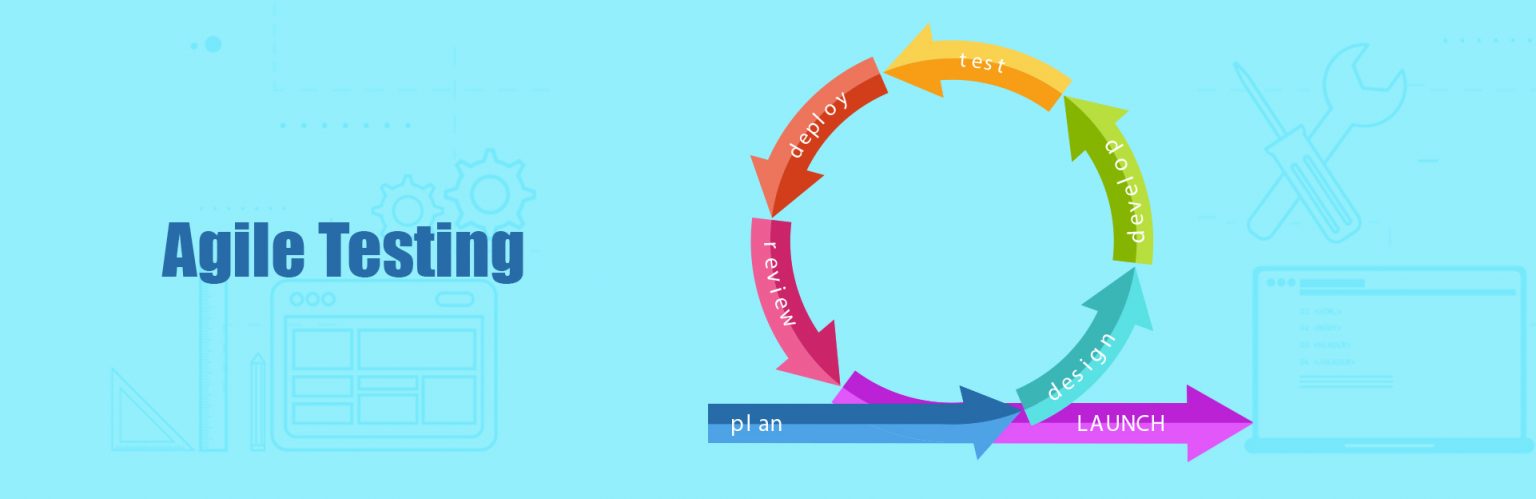
As a CXO, you might have often wondered how you can keep tab on your product quality and Agile testing in real time and be in control of your development schedule. How often have you wanted someone to tell you clearly and with data if the product quality is good enough to take it to market. And we know you do not need senseless reports and dashboards that are high on content but low on value

CXO Quality Dashboards

CresTech’s CXO Quality dashboards precisely solve this problem. Based on years of our experience working with top industry CXO, we have come to know how you want to measure your product quality and what you want to see from your product quality report.

Designed specifically for top management, our CXO quality dashboard give you a precise idea of application quality index in quantifiable terms and helps you answer questions like

  • What is the quality index of my product?
  • What are the most risky areas of my product that need more testing
  • Am I fixing defects fast enough to be on top of my schedule
  • What is the % of code that’s my testing covers
  • How does my testing efficiency rates against the industry standard norms
  • What is the quality risk if I Go-Live now

Drawing data out from your existing ALM and Test management systems, we transform the data into concise actionable indexes that can help you take key business decision like whether to go live or not with the product in an instant.


Read our informative blog on 5 Key Elements of Scaled Agile Framework.

Understanding Security Compliances

Digital transactions and Security Compliances are increasing rapidly and more people than ever are using these platforms. Statutory & Regulatory bodies across the world are continuously protecting this digital information of the users from mishandling or theft. Data Protection law in European Union is even more stringent now after GDPR compliance came into force. Purpose of all this being to safeguard interest of the end users.

At a Glance

Compliance Frameworks are sets of guidelines and best practices. Organizations follow these guidelines to meet regulatory requirements, improve processes, strengthen security, and achieve business objectives. Non-Compliant organizations face security breaches. When a company suffers a security breach, it is often difficult to quantify the totality of the damage, in part because there are so many potential financial consequences. Some of the biggest security breaches in recent years are:

  • Leading Pharma firm slapped with $4.3 M penalty for HIPAA violations.
  • Marketing firm leaked a personal information database with 340 million records.
  • Leading Airlines was fine $230m for data breach
  • Leading Hotel chain was fined for $124m for data breach of 500m customers

Know the Security Regulations

Payment Card Industry Data Security (PCI-DSS) : Organizations that handle cardholder information for major debit, credit, prepaid, e-purse, ATM and POS cards fall under this regulation. These compliances results in tapping the financial frauds, primarily through protecting debit/credit card and account information of the customers. Noncompliance to PCI-DDS can cost between $5,000 and $100,000 per month as fine.

Health Insurance Portability and Accountability Act ( HIPAA): This bill puts in place many regulations regarding the security of patient data. Companies that handle healthcare data, from hospitals and clinics to insurance companies, are required to comply with HIPAA regulations. Penalties for non-compliance and Security Compliances can range from $100 to $50,000 per violation, with a maximum penalty of $1.5 million annually

Sarbanes Oxley Act (SOX) : It is designed to protect investors and the public by increasing the accuracy and reliability of corporate disclosures. This act requires companies to maintain financial records for seven years. Affected companies include U.S. public company boards, management and public accounting firms.

Federal Information Security Management Act ( FISMAA) : The Federal Information Security Management Act of 2002 treats information security as a matter of national security for federal agencies. Comprehensive framework for ensuring the effectiveness of information security controls over information resources. It requires each federal agency to develop, document, and implement an agency-wide program to provide information security for the information systems that support the operations and assets of the agency.

General Data Protection Regulation(GDPR) : It aims to protect citizens in the European Union (EU) from data breaches. The GDPR applies to all companies processing personal data for people residing in the EU, even if that company is not physically located or based in the EU. Companies that fail to comply can face massive fines equaling four percent of their global turnover, or 20 million euros, whichever is higher.

Gramm Leach Bliley Act (GLBA) : This Security Compliances is a United States federal law that requires financial institutions to explain how they share and protect their customers private information. It requires financial institutions that offer consumers financial products or services like loans, financial or investment advice, or insurance to explain their information sharing practices to their customers and to safeguard sensitive data.

Why Organizations need compliance?

Enhanced risk management framework: Compliance regulations help in defining a proactive security and risk posture for any organization, and then translating that posture to actionable security controls.

Reassure Customers: Compliance regulations help in protecting customer data which helps in achieving customers trust and contributes to brand reputation.

Avoid breaches which in turn minimize losses: Regulations prevents breaches, which can cost millions of dollars and dent organization’s exchequer. Due to the data breach, many companies end up losing revenues in sales, additional repair costs of the application and legal fees, all of which can be avoided with the right preventive measures.

Security Compliance grows even more challenging

Organizations have been earnestly taking precautionary measures against risks, continuous compliance of their environment and proactive IT operation processes. Since each major security standard involves an evolving set of specific requirements, achieving security compliance can be complicated, costly and challenging.

  • Key Challenges that organizations must address in order to optimize their security and compliance programs:
  • Continuous monitoring of the compliances adherence for geographies where it operates over evolving technologies
  • Recognize the impact of a security breach.
  • Create a security strategy that’s at pace with the ever-changing security and technology landscape.
  • Adjust to the rapid growth in Endpoints which can drive up the challenge for any organization’s ability to make sure each device is compliant with industry standards.
  • Acquire skilled resources to apply these compliances

Achieving compliance within a regulatory framework is an ongoing process. Organizations, environment is always changing, and the operating effectiveness of a control may break down. So, choosing an appropriate compliance policy, applying effective controls, regular monitoring and reporting is a must. An automated compliance monitoring can be the solution. Data analytics are now well established as a very effective way to monitor and test many forms of transactions and other activities that are impossible to examine manually.

Consideration while Implementing compliance framework

  • Accurate assessment of the business’s needs relative to IT and IOT using a risk-based orientation.
  • Adoption and application of an appropriate standards-based framework.
  • Creation or adjustment of your security and compliance architecture.
  • Selection of strategic vendors/partners whose technical abilities, strategic vision, and commercial strength and viability, will support any architecture and it’s core capabilities will address the challenges these trends present to an organization.
  • Development, phased implementation and deployment of security and compliance plan, prioritized by business risk.
  • Implementation of continuous automated monitoring programs.

In summary, we understand that security non-compliance can cost heavy to business and its reputation. So, to the online platform this is not a choice anymore. Based on the nature of business and the geographies of operation though analysis is needed to understand and apply the security compliances. Continuous evolving strategy should be planned to ensure the business is always complied to the latest compliance and technology needs.

To get more information on our software security testing services, please browse our service page.

Enhance performance testing of your app by integrating JMeter with pCloudy

Digital experiences and performance testing are front and center in a modern enterprise’s business strategy. Mobile app performance has a tremendous impact on customer experience today and can directly affect business. With the growing complexity and the size of digital applications it is imperative for enterprises to ensure best performance of their apps.

Here, in this webinar we bring to you an integration of pCloudy with JMeter in order to make it easier for you to ensure awesome customer experience.

Covering the following in this webinar

  • Speed and Beyond
  • A Performance Shift
  • Integration with JMeter
  • Meaningful metrics