What businesses need to know about LOAD TESTING and why they should go for it

With the upsurge in the adoption of technology in various business environments and organizations increasing reliance on software applications for core operational transactions, the need for fast, reliable and stable performing applications has become an absolute necessity.

The possible drawbacks on an organization’s business due to performance issues are revenue loss, poor end-user satisfaction, high maintenance cost and increased cost to scale up.

There is an increasing demand from customers for fast and reliable applications not only to meet their growing business needs, but also to gain a competitive edge in the market.

Software load testing is the discipline concerned with designing and executing non-functional tests to know the current performance of an application vis-à-vis the speed, scalability, stability, and other performance parameters.

Load testing is apt for software solution providers as a diagnostic tool to locate bottlenecks and performance issues within an application.

In Load testing we endeavor to question ourselves the following and address the same by evolving an effective testing methodology.

  • Whether the application meets the defined response time requirements of my customers?
  • Will my users experience acceptable response times even during peak hours?
  • What system capacity is required to handle expected load?
  • Where are the bottlenecks in my multi-user environment?
  • How can we detect defects that only occur under real-load conditions?
  • How can we optimize the multi-user application before it goes live?


What is Load Testing?

Load Testing is a testing process that determines how software applications affect the user experience when they are used simultaneously by many users. With application load testing, we will be evaluating the system behavior/degradation with various loads and/or configurations to ensure:

a) that the system meets the performance requirements as defined,
b) determine the capacity of existing systems and
c) create benchmarks for future systems.


Why is Load Testing important?

Load testing service is important because sometimes popular sites often suffer from outages when they draw unforeseen traffic on their pages. To avoid such outages, via the various tools we use, we ensure glitch free usage of an application.


What is the process involved in Load Testing?

To ensure that the load testing is conducted in a systematic, well documented with timelines, the following process is adopted:

  • Evaluate requirements and identify scenarios
  • Develop load test scripts by emulating end user actions
  • Automate and Execute the test scripts with different volume of data and concurrent users
  • Monitor the tests with automation
  • Analyze results and verify across the SLAs
  • Craft load test report


What is performance benchmarking and baselining?

  • Benchmarking:
    A set standard that helps to determine the quality of the performance of the product. We establish high-quality metrics of an application to meet various business standards.
  • Baselining:
    To compare the performance of a new application with a known standard of system performance. We ensure that the application doesn’t degrade with any new updates over time.

Performance testing helps assess your application through the speed, effectiveness, scalability and reliability.


What are some important metrics captured during load testing?

There are curated metrics that are captured while performing load testing. These metrics are captured by analyzing products.

  • Response time
  • Transactions per second
  • Hits per second
  • Throughput
  • CPU utilization
  • Memory usage
  • Network load


What are the popular testing tools used in performance testing?

  • Jmeter:
    An open-source tool to test load and measure performance by simulating heavy loads. Mainly used for testing web applications.
  • LoadRunner:
    An automated load testing tool which can create virtual users and scale up the capacity of the virtual users, identify processes having trouble and diagnose a problem to find out the root cause.
  • Neoload:
    It is a proprietary automating tool used for performance testing on web and mobile applications.
  • Silk Performer:
    Load and Performance testing tool for Java and .Net applications.
  • Rational Performance Tester:
    An automated testing tool for performance testing from IBM.


When is the right time to get load testing done?

When the application is relatively stable and before rolling it out to production would be the right time to get load testing done for your application. Also, load testing should be done at an early stage to assure performance consistency across user loads, to ensure speed and scalability with current infrastructure and for continuous stable performance.


In EdTech, Collaboration is the Key


About EdTech

Simply, EdTech is a combination of hardware, software and educational content to enhance, engage the learning of an individual. It is a practice of introducing digital tools into classrooms, home or anywhere to create a fun learning experience.

We all know that the pandemic has led to a drastic transformation across all sectors and industries globally, and most crucially Education. Over a period, classrooms have moved beyond books and pens to tech infused devices, interactive online courses or even a bot that can take notes and record lectures for students who can’t make it for their classes. We noticed that the need for technology in the education sector has never been more pronounced. Post Covid, EdTech will likely continue to remain relevant along with traditional ways of learning. EdTech highlights the importance of collaboration to learners and content creators. Working or learning together can make the process faster, easier and efficient. Let’s understand how.


Collaborate to bring efficiency:

“If you want to go fast, go alone. If you want to go far, go together”.

Collaborative learning describes a fun learning environment where a group of learners of mixed abilities interact with one another to complete a common task, which leads to achieving fruitful success. It is believed that educational experiences that are active, social, contextual, engaging and learner-owned lead to deeper learning. Similarly, the content creation can also be enriched with collaboration, bringing different dimensions from contributors. Let’s discover some of these platforms that can enable collaboration.


Collaborative platforms

Collaborative platforms have become a hot topic among modern business, colleges and universities as well as elementary schools. These platforms can increase team’s productivity as they allow them to share information, files, and documents and help them communicate  faster.

During the pandemic many educational systems have realized the usefulness of remote learning. Collaboration platforms not only eradicate the need for physical meeting of students and teachers, they also improvise on the speed of content sharing and exchanging of ideas. Collaborative learning tools support the innate needs of students getting feedback regarding their progress and having their questions answered by their teachers or by their peers. Few examples of Collaboration tool that can help teachers and students interact efficiently are:

  • Padlet
  • Whiteboard
  • MS word
  • Skype
  • Zoom
  • GoSoapBox
  • Piktochart

Learning or content development with peers will enhance the experience and content.


Collaborate for Learning / Peer Learning

Peer learning is a process where one learner engages with other learners to build an understanding on a content. Peer-to-peer learning is an effective method of knowledge transfer and a cost-effective method of training and development.

Similarly, during the content creation process, reviews done by the co-author or peers is termed as peer review. This has the power to add-up any missing dimensions in the content. The outcome of the peer review will be a better version, which can be understood better. All the above is possible if the collaborative platform has a concept of co-authoring in it.


Collaborate for building content / Co-authoring: When multiple authors can work or edit a single document and collaborate concurrently in real-time without interfering with each other’s changes, that’s called co-authoring. It removes barriers to server-based / version controlling collaboration. This feature helps schools, universities, and organizations to avoid unintentional multiple versions of documents by reducing the need to share attachments.


Collaborate Content and Actors:

For any EdTech it is important to have a content rich repository that can be organized into different segments. This categorization into segments increases the reusability of the content and helps in the upgradation of the content. Actors or users on the repository should be regulated so that any content mishandling can be prevented. Workflow can be defined for adding, updating, and deleting content from the repository that can pass through multiple levels, to avoid any misses or deliberate act of disruption.


Conclusion:

Aforesaid content describes most common enablers of EdTech, however there can be more based on the need of solution and audience. In the coming years collaborative learning and working will emerge as a distinct competitive advantage and skill. EdTech is going to play a major role to the masses and corporations by providing required information and collaboration.  Businesses or schools that adapt these tools and techniques and actively work to uplift collaboration as an essential skill will be the leaders. Alone we can do so little, and together, we can do so much. – Hellen Keller

5 Key Elements of Scaled Agile Framework

The Scaled Agile Framework® (SAFe) is an online knowledge base of Tested principles to apply Lean-Agile (continuous delivery and improvement) at enterprise level. It provides a simple and lightweight experience for the software development team.

SAFe is most-popular among enterprise organizations as many of its facets focus on eliminating the common challenges teams face when scaling agile. Developed in the year 2011 to help software development teams bring better quality products to market at a faster pace. It was originally called the “Agile Enterprise Big Picture” by software-industry veteran Dean Leffingwell, who published the bestselling book Agile Software Requirements Before SAFe- when we used to build large and complex systems using Agile Methodology, the results were delayed delivery and the quality was not that great, as a result, the customer experience was also not great. SAFe tries to address these issues and software testing companies who have adopted these frameworks have shown amazing result.

When to Use Scaled Agile Framework

To fix the following inefficiencies SAFe is used.

  • Difficulty in coordinating multiple teams working on a large-scale project
  • Coping with longer planning horizons
  • Increased effort in keeping track of multiple sources of requirements
  • Un-mapped dependencies creating unexpected issues and obstacles

SAFe Core values

1. Alignment: It is necessary to keep up with the rapid change. More importance should be given to enterprise business objectives over team goals. .

2. Built-in quality: Ensures every element and increment that’s being built is of same slandered of quality.

3. Transparency: To achieve best results transparency within the organization is really important. Transparency & trust ensure that the business and development can confidently rely on another, particularly in times of difficulty.

4. Program execution: Leaders participate as Business Owners in Program Increment (PI) planning and execution, while aggressively removing impediments.

SAFe Principles:

  • Take an economic view
  • Apply systems thinking
  • Assume variability; preserve options
  • Build incrementally with fast, integrated learning cycles
  • Base milestones on objective evaluation of working systems
  • Visualize and limit WIP, reduce batch sizes, and manage queue lengths
  • Apply cadence, synchronize with cross-domain planning
  • Unlock the intrinsic motivation of knowledge workers
  • Decentralize decision-making
  • Organize around value

Highlights of SAFe

  • Agile Release Train: Is a long lived team of Agile teams, which, along with other stakeholders, incrementally develops one or more Solutions in a value stream.
  • Continuous Delivery Pipeline: Describes the workflows, activities, and automation needed to provide a constant release of value to the end user.
  • Customer Centricity: Is a mindset that focuses on creating positive experiences, such as the customer journey, which takes buyers through the full set of products and services that the enterprise offers.
  • Program Increment (PI): Is a time box in which an ART delivers incremental value. PIs are typically 8 – 12 weeks long, and the most common pattern for a PI is four development Iterations followed by one Innovation and Planning (IP) iteration.
  • Innovation and Planning (IP) Iteration: Provides the teams with an opportunity for exploration and innovation, dedicated time for planning, and learning through informal and formal channels.
  • ScrumXP: ScrumXP uses the Scrum framework for managing the team and their work as well as XP derived quality practices.
  • Team Kanban: Is a method that helps teams facilitate the flow of value by visualizing workflow, establishing Work in Process (WIP) limits.
  • Built-In Quality: Ensures every solution increment is high in quality and can readily adapt to change.

Challenges with SAFe:

As explained above SAFe agile is to overcome Agile’s pitfalls, however every model have some challenges and so does SAFe. A few of them can be as follows:

  • Primarily Top-Down Decision Making: Due to which it Possesses Similarities to waterfall model.
  • Terminology Heavy: There are 4 levels in SAFe. Coupled with its use of Lean, Agile, and;
  • System Thinking: It does end up with a significant amount of terminology and body of knowledge.

In short, SAFe is a framework which gives us alignment not only with the team(lower level) and program level(middle) but also helps us align to with organization strategy(top level) and how a team’s works in adding value to customers right from the top level. It is available in different configurations, and companies can take advantage of it.

SAFe comes in various configurations, depending on the specific needs of an organization. These configurations include Essential SAFe, Large Solution SAFe, Portfolio SAFe, and Full SAFe, each offering different levels of guidance and complexity to address different organizational contexts.

It’s important to note that while SAFe is widely adopted in many enterprises, it’s not the only approach to scaling Agile practices. Organizations should carefully assess their own context, needs, and culture before deciding on the best approach to scale Agile within their organization.

5 Metrics to a clearer view of your Project’s Health and Quality

Introduction

Metrics are used to measure various characteristics of a project. They describe an attribute, as a unit. From a software point of view, they can be classified into product quality metrics or project quality metrics. Product metrics are the ones that focus on product quality by describing its attributes and features whereas project metrics focus on improving the project quality. There’s another category of metrics, process metrics which we leave for another post.

Why Quality Metrics?

Quality metrics are measured against quality standards to determine whether the product works to the client’s expectations and if the project is in good health. By good health, it is meant that the development of the software (product) is on track with minimal or negligible problems. Problems that might end up hampering the whole development process, hence resulting in delayed results.

One must understand that metrics aren’t just limited to finding defects, but is about getting insights to optimize the development process.  It also concentrates on qualities like reliability, consistency, and so on. Both products as well as project metrics should be measured and monitored with equal importance.

Generally, you might find a huge number of quality metrics to measure. Let’s focus on the ones which help us analyze a project’s health by providing insights that really matter.

Following are the Metrics

 Let’s look into some project metrics:-

1. Finance

Some people may not consider costing as a quality metric to measure, but in reality, it definitely is. Without laying down the budgeting plans, monitoring the expenditure, and going through the finance books, you cannot deliver something of topmost quality as one might run of resources to maintain the same. This eventually ends up affecting the project’s health. Costing should be looked after with the utmost care to sustain good quality and a healthy project. Some metrics to use are:-

  • Cost Variance: Difference between the actual cost and planned cost.
  • Cost per Problem Fixed: Amount spend on an engineer/developer to get the problem fixed.

2. Defect Quantification

To make the project free of bugs and errors, defects need to be quantized and worked upon(fixed). Lesser the number of defects, better the project’s health. Defects can be dealt with in many ways. All we need to make sure is to make the best out of the defect resolution process and hence increase productivity. Some of the metrics are:-

  • Defect Density = Total Number of Defects / Total Number of Modules
  • Defect  Gap Analysis ( Also called Defect Removal Efficiency)% = (Total number of fixed defects/Total number of valid defects reported)/100
  • Defect Age = Average time taken in finding a defect and resolving it.

3. Scheduling

It helps to analyse the progress made in the completion of a project. Being on the schedule should be of topmost priority, as at the end of the day, you might not want to disappoint your stakeholders with a delayed result. All you need to do is stick to the planned schedule and measure Schedule Variance.

  • Schedule Variance:  Difference between the scheduled completion of a task by the actual completion of the task.ie.
  • SV= Actual Time Taken – Time  Scheduled

Every project is eventually a product made available in the market.  Following are the product metrics that one should always measure:-

4. Performance of the Project

Performance is measured by the performance metrics. Every software is designed to accomplish specific tasks and give results. It is measured if the product can deliver as per the requirement of the client by analysing the time taken and the resources used. One way of measuring performance is to set small goals and work for them. After the accomplishment of such goals, study the process. This approach ends up giving exceptional insights into the project’s health.

  • ROI – Return of Investment: Comparison of earned perks/benefits and the actual cost
  • Resource Utilization: Measures how the individual team member’s time is spent.

5. Usability

A program should always be user-friendly, as eventually, it has to be used by an end-user. One way of measuring this is by analysing the project from a user’s perspective almost after every step in the developing process. This will help to fix errors and bugs on the go, so you don’t have to revise the steps you took weeks ago just to fix a recently discovered bug which might end up being really frustrating. Measuring the usability metric will provide insights to improve effectiveness, bring about efficiency, and thus achieve customer satisfaction. Some metrics to measure are:-

  • Task Completion Rate (used to measure effectiveness) Effectiveness = (Number of Completed Tasks/Number of Task Undertaken)*100
  • Task Completion Time =Task End Time – Task Start Time

Conclusion

Summing up, now is the time to get over the traditional practices, and add this method (of measuring metrics) to your work approach. Find the weak points, prioritize opportunities, and experiment to know what works, or what doesn’t. If you want a powerful and attractive project, which is healthy and guarantees customer satisfaction, measuring quality metrics is the answer you’re looking for.

If you’re looking for more information , please contact us we will be happy to help.


Is your QA practice ‘Future-Ready’?

COVID-19 has changed the world. It has changed mine. I no longer have the luxury of breathing in the unfiltered atmospheric air, where I get to smell the delicious aroma of food from wayside vendors. There’s always a mask on my face. COVID-19 has affected the way organisations and businesses and QA practice are being run as well. 

Arguably, Quality Assurance practice however, has been not so heavily affected by the pandemic, apart from, save a few structural and behavioural changes. Of course, there may be unprecedented time-to-market pressure or extreme cost pressure but, by and large, relying on the age-old test efficiency rule book will steer software teams out of harm’s way. 

With regards to COVID-19, there seems to be no end in sight and as such, we must actively seek new ways of dealing with the new normal. This is essential in sustaining the QA practice while maintaining the same level of work efficiency and quality of services. I call this ” The future-ready QA practice”. 

First, we must come to terms with the new normal and remote work. QA teams that used to huddle around in small spaces, writing and executing software test plans may not be able to do so anymore. Employees are increasingly being distributed across space and time zones and QA teams must adapt to the new system without compromising on providing the highest quality of digital experiences for the end user. 

Let’s look at the pro’s of the new setup. 

  • One advantage is that work can be done anywhere, or anytime depending on contractual terms. This helps in easier time management and results in higher productivity.
  • This setup could potentially improve employees’ work-life balance, and spillover into positive attitudes towards work.
  • It eliminates the travelling time and cost, the day to day cost of spending a day at office and hence, helps save some crucial time and money.

All the above being true, this does come with its own challenges. Employees may not have an official setup (office desk, space etc.)  fast internet connection, depending on which part of the globe you’re practicing, which could cause release cycle delays and disruptions. Employers must therefore make provision for the requisite tools needed for a smooth practice at home. This could mean accelerating the adoption of digital cloud computing services; SaaS, or helping employees set up adequate home networks for efficiency sake.

Cloud to the rescue

Accessing the test environment presents another challenge for remote QA practice. The test environment could be accessed remotely, either through an on-premises server or a cloud-based service. This further underscores the need to move towards a cloud-based development and test environment. While at it, automated tests must be meticulously written, they must follow the branch of code they test, be peer-reviewed, and merged into the regression set. There should be proper documentation as well, so team members at different geographical areas can troubleshoot a test as easily as the originator.

New Engagement Models

Organisations must also consider new delivery models on important factors such as data security and privacy, risk, and compliance audits. Though remote work is convenient, it poses an increased risk for internet fraud, data loss, or system compromise. While you work hard to meet your client’s expectations, hackers are equally working hard to find vulnerabilities to exploit. It is essential to obtain original software licenses and keep an inventory of all open source usage across development teams. Maybe you could add a VPN to your network, have stricter password policies and more importantly, create backups. I cannot overemphasize the Backup.

New ways to supervise and communicate

Supervision. Effective supervision is the difference between a good product and a great product. Nancy Kline, founder and President of Time to Think, described supervision as an opportunity to bring someone back to their own minds to show them how good they can be. Every employee, no matter how skilled, needs a mentor, a supervisor or just somebody to run things by. Supervisors must set achievable goals with reasonable timelines. Employees must endeavor to meet those timelines while delivering on quality. It is also important to reward hard work. Honorary mentions can be made on the organization’s internal social media groups when an outstanding achievement is made by an employee. This can motivate them to do better and remind others that they’re still being watched though they’re at home.

Adaptive and Agile Workforce

Continuous Professional Development for employees is required to maintain a competitive practice within the industry. Technology is changing. There is always something new to learn, or another skill to garner. More so, the job market is now open to anyone around the world with the required skills who demonstrates aptitude for the task at hand. Therefore, the need to constantly improve skills is now more important than ever. Digital learning, however, makes it easier to acquire skills without necessarily taking time off the job. Admittedly, it will take some effort on the employees’ part and encouragement on the employer’s part to keep up with lessons, but it is far from impossible. Ultimately, it becomes a win-win situation for both employer ( who has the most skillful testers) and employee ( who has developed himself into a more valuable asset).

Keeping the human element alive

Finally, working from home or remote work gives employees a level of isolation. Everybody loves a happy and healthy work environment surrounded by work buddies who would give you a brief pat on your shoulder for a good work done, or rub your back while you’re battling with major bugs. But remote work takes the human element away. This means that communication must be of good quality, proactive (on the part of employees) brief, (nobody wants a nagging boss on the phone for hours) and frequent. This is where tools like Microsoft Teams, Zoom and Google Meets come in handy. The good old telephone call works fine as well. Weekly check-in calls with all employees, seeking suggestions and opinions on what could be improved is admirable. Again, everybody loves a great party. Who says you cannot organise a bring your own bottle party on Zoom? The downside of this is that, when all’s said and done, employers may have a hard time bringing back employees into the office space. But that is the inevitable future, and the faster the acceptance, the better.

While the uncertainty of living in the  Covid-19 era continues to affect organizations  all around the world, only the most agile, dynamic and resilient teams will come out stronger and unscathed. Is your team future-ready?

In summary, being future-ready in QA practice testing means embracing emerging technologies, methodologies, and trends to ensure high-quality software products that meet the demands of the ever-evolving digital landscape. By staying ahead of the curve, QA teams can contribute significantly to the success of software development initiatives. This will help in delivery quality assurance and testing services.

5 things you should know about Digital Analytics

A large portion of the world we now live in, happens online. We wake up in the morning not to an alarm clock, but to our wearable devices connected to smart phones. We research things, watch videos, catch up with friends on social networks. We even get directions and book our vacations online. And everything we do leaves a trail of data behind it.

As a consumer, you might not know this, however, as a marketer, you’re using all this consumer data to make better decisions and thinking about how to spend your marketing dollars and improve your websites and mobile apps to optimize the customer experience. All the above is Digital analytics.

By definition data analytics is the process of analysing digital data from various sources like websites, mobile applications, among others. Digital analytics is a tool used by organizations for collecting, measuring, and analysing the qualitative and quantitative data. This data consists information on what your visitors/users are doing, where they come from, what content they like, and a lot more.

Type of data that can be analysed:

Structured data

  • Sales Record
  • Payment or expense details
  • Payroll Details
  • Inventory details
  • Financial details

Unstructured Data:

  • Email and instant message
  • Payment text description
  • Social media activity
  • Corporate document repository
  • News feed.

Business value of digital analytics:

  • Identifying unknown risks.
  • Deeper insight into business to predict customer trends.
  • Act with confidence, based on numbers.
  • Targeted approach based on your actual user base.
  • Deep Analytics and comparisons into different behaviour of your user base.
  • Interactive visualizations of trends
  • Ability to curate projects and then share with non-analysts, making analytics more approachable than ever.

Digital Analytics Use Cases:

Modern analytics framework empowers the ordinary businessmen by bringing advanced analytics tools to their desktop. In Retail it helps to predict sales outcomes for the immediate future and in Healthcare it predicts risk of potential threats to patients’ wellbeing. Financial and risk management uses Big Data, along with predictive analytics, in forecasting demand.  The Consumers and Practitioners of Digital analytics can range from a CXO to a Product Owner.

Stages Involved in Digital Analytics:

  1. Curate: Transforming data in a standard structure to be usable.
  2. Profile: Validating data at a macro level.
  3. Analyse: Examining data to discover essential feature.
  4. Investigate: Observing the data in detail.
  5. Reporting: Documenting and reporting in granular form as per the requirements.

Every organization, regardless of size, requires analytics tools to understand the performance of its website/app, satisfaction of its consumer and gain key context from business rivals. Most Common subset of digital analytics is to analyse the website data that is called web analytics and further let’s know how it is implemented.

Web Analytics Tools:

These tools help us to go way beyond counting hits and page views. It help us to make decisions and find the answers to questions. Different people and different roles in your organization will need different sets of data and different levels of granularity.

For example, a company head will be interested in seeing what the trends of yearly revenues are? A marketing manager might want to drill deeper and understand which marketing channels are driving those revenues? Using the data generated by an e-commerce site, these tools can tell us which products are selling well and which ones aren’t. This can help in inventory management, sales forecasting and even manufacturing or procurement decisions. And we can even deep dive and see which products are selling well in which geographic region.

Following are some trending web analytics tools:

  • Google Analytics
  • Adobe analytics
  • ClickMeter
  • Crazyegg
  • Clicky

Key Concepts of the tools:  

Events: Events are user interactions with content that can be measured independently from a web page or a screen load. Downloads, clicks, Flash elements, and video plays are all examples of actions you might want to measure as Events.

Dimension and Metrics: Every report in Analytics is made up of dimension and metrics. Metrics are the quantitative numbers that are measuring data in counts, ratios, percentages. Whereas dimensions are the qualitative categories that describe the data in segments or breakouts.

Page View: The number of page views refers as a count for every time a visitor loads that page.

Referrers: Indicates where the users came from, and are separated into four main types: Search Engines, Other Websites, Campaigns and Direct Entry.

Visitor: The user who made the visit. We may find the visitors divided in new visitors and returning visitors, which lead us to fidelity indexes. It also may contain a large amount of technical information about their computer, browser, operating system, screen size, plugins, location, etc.

Segmentation: Segmentation isolate your data into subset for deeper analytics and solves your problems, you can always segment your data by following: – Date and time – Device – Marketing channels – Geographic channels – etc. (Dozens of options)

Significance of Web Analytics Testing

The web analytics testing services are important to help you to see how your users are connecting to your sites. For the increment of conversions rate, you should use different testing method including Web analytics A/B testing and WAAT using selenium.

Web analytics A/B testing: This testing help us to compare two or more versions of an application or a web page outcomes. Also it enlightens you regarding the execution of clickable components of your website page. With this you’re pitting two versions of your asset against one another to see which comes out on top. This assists in getting a site with continuous execution development. Web analytics automation testing framework:

WAAT (web analytics Automation framework) is an open source and valuable framework that provides a way to automate the verification of name value pair properties / tags being reported to a Web Analytics System

Typical Business Dashboards for a web application:

  • Top visited pages or journeys that is most valuable from a customer traffic,
  • Revenue (by marketing channel or program)
  • Opportunities and prospects
  • Conversion rates, Geographic data

Culmination: In simple words it is a way of collecting and analysing what’s happening on your application i.e. what your visitors/users are doing, which is great for businesses that you want to develop and evolve without taking huge risks

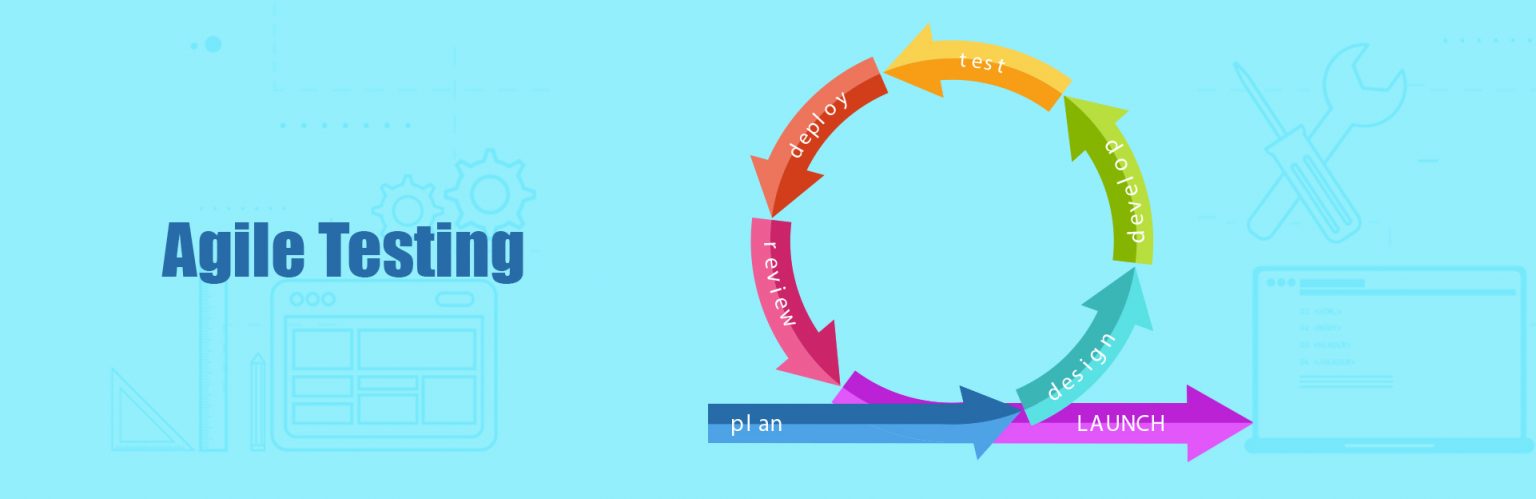
Agile Testing

As a CXO, you might have often wondered how you can keep tab on your product quality and Agile testing in real time and be in control of your development schedule. How often have you wanted someone to tell you clearly and with data if the product quality is good enough to take it to market. And we know you do not need senseless reports and dashboards that are high on content but low on value

CXO Quality Dashboards

CresTech’s CXO Quality dashboards precisely solve this problem. Based on years of our experience working with top industry CXO, we have come to know how you want to measure your product quality and what you want to see from your product quality report.

Designed specifically for top management, our CXO quality dashboard give you a precise idea of application quality index in quantifiable terms and helps you answer questions like

  • What is the quality index of my product?
  • What are the most risky areas of my product that need more testing
  • Am I fixing defects fast enough to be on top of my schedule
  • What is the % of code that’s my testing covers
  • How does my testing efficiency rates against the industry standard norms
  • What is the quality risk if I Go-Live now

Drawing data out from your existing ALM and Test management systems, we transform the data into concise actionable indexes that can help you take key business decision like whether to go live or not with the product in an instant.


Read our informative blog on 5 Key Elements of Scaled Agile Framework.

Managed Product Quality

Poor Software Quality is a threat to your reputation and a recipe for disaster.

Often the difference between the success and failure of your software product can be explained away in a single word quality. No amount of sleek marketing can save your product in case it carries inherent flaws and you risk losing not only your customers but your reputation too.

The reliability of the software and its robustness are critical aspects in gaining customer loyalty and most organizations today simply cannot shy away from building appreciable quality into the software they create.

Poor quality leads to excessive labor and support costs

When you release a software with defects, they end up costing you a whole deal more than what you would have spent on enforcing quality. To start with, as customers start identifying defects, your developers would end up in a continuous cycle of fixing bugs. Moreover, more defects lead to demand for more support staff which invariably adds to your baseline costs besides bringing down your market share in the long run.

Keeping Costs Low while improving overall product quality

If you look at the overall scenario you will soon realize that investing in product quality would invariably give you positive results in near future. However the cost of ensuring quality may be a mitigating factor. In such circumstances you should look at taking up a Managed Product Quality service from an outsourced software services quality of offshore software testing company.

Ensure complete software quality through our Managed Product Quality Service

CresTech’s managed quality services are tailored to offer a set of testing solutions that literally change the way in which a company produces and releases software through its entire lifecycle. From taking into consideration your expectations of product quality to encompassing the best practices, we make it a point to ensure that the quality of your software product is second to none.

Some of the services that our offshore software testing unit provides here include

  • Formulating an agile and effectual testing and release framework
  • Ensuring best practices are diligently followed through extensive training and monitoring
  • Introducing new technologies and automation tools whenever necessary
  • Training your existing Testing team to achieve better productivity
  • Right staffing your team
  • Setting up right tracking and alert mechanisms
  • Improving overall productivity of your testing team and removing process deficiencies
  • Holistic testing of your applications on all relevant parameters and compliance norms. We follow the most stringent quality checks that you can rarely find in an offshore software testing company.

Why it makes great sense to go with us

Given our track record in delivering exceptional quality, we believe our Managed Product Quality service can take the load of your team and free you up from the hassle of enforcing quality.

Few reasons which make us the best offshore software testing company in business includes:

  • Expertise and Experience
  • Comprehensive Testing Approach
  • Domain Knowledge
  • Quality Assurance Processes
  • Testing Tools and Infrastructure
  • Flexibility and Adaptability
  • Communication and Reporting
  • Security and Confidentiality
  • Cost-effectiveness
  • Client References